Damp or Condensation? How Can You Tell What’s Causing Moisture and Mould in Your Home?
Posted 2 November 2026 By Easton Bevins
Damp and condensation are often discussed interchangeably, but they can have very different causes. If moisture or mould appears in your home, identifying where it is coming from is essential before deciding what to do about it.
Damp and condensation are often discussed interchangeably, but they can have very different causes. If moisture or mould appears in your home, identifying where it is coming from is essential before deciding what to do about it.
A damp patch, mould growth or water droplets might seem to point to an obvious problem. In reality, similar symptoms can result from condensation, penetrating damp, a leak or another building defect. Understanding the difference can save you thousands and help ensure the right problem is being treated.
Is it damp or condensation?
Damp generally refers to moisture entering or being retained within the fabric of a building. There are several potential causes, including:
- Penetrating damp caused by defects such as damaged pointing, gutters, roofs or cracks
- Rising damp, where moisture moves upwards from the ground through masonry
- Plumbing, roof or rainwater goods leaks
- Defective building materials or detailing that allow water into the property
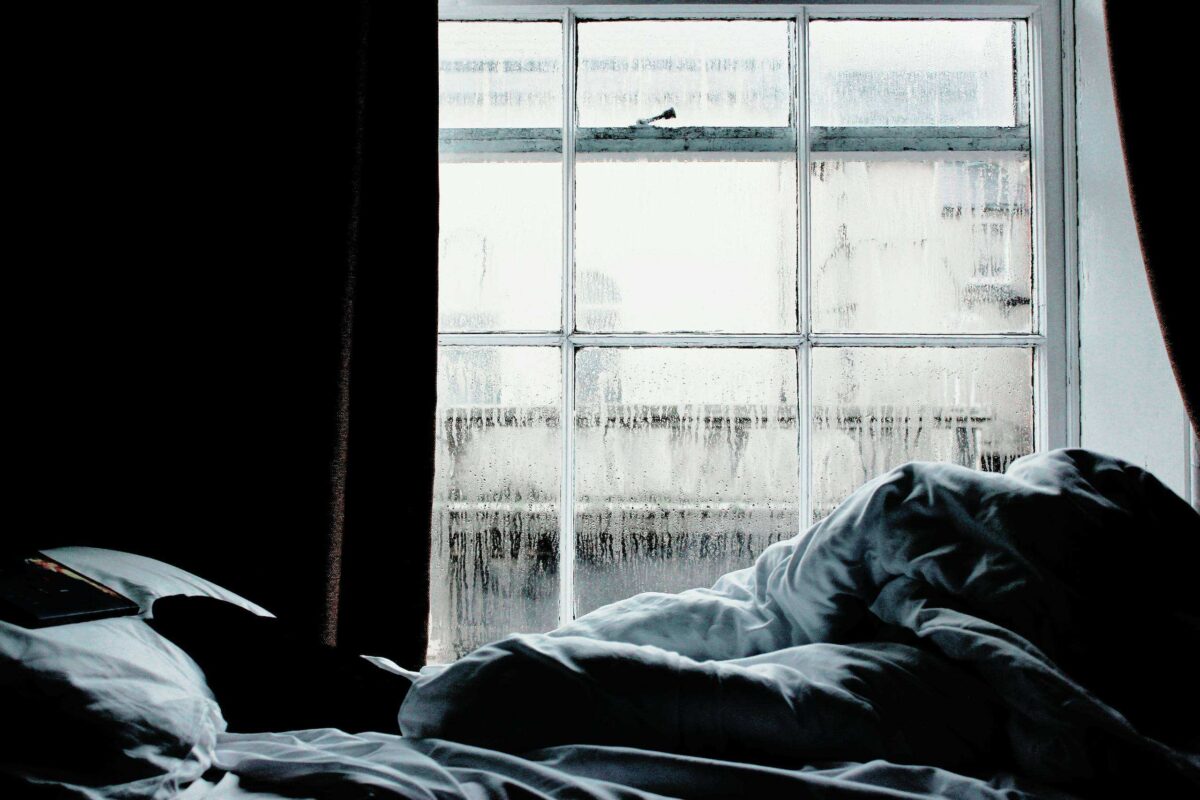
Condensation works differently. It happens when warm, moisture-laden air comes into contact with a sufficiently cold surface and turns into liquid water.
Think of a bathroom mirror after a hot shower. The warm, humid air meets the colder glass and droplets form. The same process can occur throughout a home.
What does condensation look like?
Condensation is commonly associated with water droplets on windows and other cold surfaces, but this isn’t the only sign. It can also appear on:
- Cold external walls
- Windows and window reveals
- Ceilings
- Poorly insulated areas
- Thermal bridges
- Roof spaces
Unfortunately, persistent condensation can also contribute to mould growth, particularly where ventilation is inadequate and this affects more than the surfaces you see every day. For example, during one of our projects in Bristol recently, through use of moisture meters, we located significant roof-space condensation during inspection.
As you can see, we found that water droplets and mould had saturated roof timbers to detrimental effect. It effectively illustrates how damaging condensation can be when dismissed as “a little mould” around a window.
What does penetrating damp look like?
Penetrating damp occurs when water enters a building through a defect in its external envelope.
The cause might be damaged pointing, defective gutters, a roof defect or cracking. Leaks from plumbing, roofs or rainwater goods can also lead to moisture appearing inside a property.
The important thing is that the visible damp may simply be a symptom. Finding where the water is coming from is key to determining the appropriate repair.
Can mould be caused by condensation?
Yes. Persistent condensation can create conditions where mould is able to develop, particularly if ventilation is inadequate.
However, mould doesn’t necessarily tell you what is causing the moisture. Removing the visible mould without addressing its underlying cause may mean the problem returns.
This is why diagnosing moisture from appearance alone can be difficult.
Can a surveyor tell the difference between damp and condensation?
A suitably qualified building surveyor can investigate the building, consider the evidence and help establish the likely source of the moisture.
That matters because there isn’t necessarily one measurement that provides the answer. The location of the moisture, condition of the building and potential defects all need to be considered together.
Where a homeowner already has a specific concern, an Easton Bevins Specific Defect Survey can investigate issues including damp problems, roof leaks, rot identification and thermal imagery.
The aim is to look beyond the symptom and establish what is actually causing it.
What survey do I need if I have damp?
Moisture-related problems may first be identified during several different types of residential survey.
A RICS HomeBuyer Survey / Level 2 can highlight significant issues and recommend further investigation where appropriate. A Major Defects Survey / RICS Level 2 provides a more bespoke assessment of major defects, maintenance issues and potential hidden defects, while a Full Building Survey / Level 3 offers the most detailed assessment.
If you already have concerns about damp, mould, staining, a leak or condensation, a Specific Defect Survey may be more appropriate because the investigation focuses specifically on the problem you are experiencing.
Why identifying the cause matters
Two moisture problems can look very similar but the causes can be completely different.
Treating a wall for damp when the underlying problem is condensation, a roof leak or defective guttering risks addressing the symptom rather than the source. Equally, assuming that moisture is simply condensation could mean a building defect is overlooked. This is why understanding the cause should come before deciding on remedial work.
If you’re concerned about damp, condensation, mould or another defect within your property, Easton Bevins can investigate the issue through a Specific Defect Survey and advise on the next steps.
To learn more, contact Easton Bevins on 0117 942 8776 or email info@eastonbevins.co.uk
Back to news