Fire risk appraisal of external walls (FRAEW) in Manchester
A Fire Risk Appraisal of External Walls (FRAEW) assesses the life‑safety risk posed by a building’s external wall system. It forms part of the building’s fire risk assessment and must be carried out using the methodology set out in PAS 9980:2022.
PAS9980 provides a methodology for assessing the external wall construction and cladding of existing multi-storey and multi-occupied residential buildings.
For advice on FRAEW assessments across the city of Manchester, call 0117 942 7876, send us an email or complete our enquiry form we’ll respond promptly.
What is PAS 9980?
PAS 9980:2022 is a governmentsupported code of practice, produced by the British Standards Institution (BSI) alongside the Department for Levelling Up, Housing and Communities and the Home Office. It sets out the national methodology for competent building surveyors and fire assessors to complete Fire Risk Appraisals of External Walls (FRAEW) for existing multistorey, multioccupied residential buildings.
Who is PAS 9980:2022 for?
PAS 9980 is intended for competent building surveyors, fire assessors and other qualified building professionals, such as façade engineers and building surveyors, who are responsible for assessing the fire risk of external wall construction. The findings are also used by those who rely on these assessments — including block managers, building control bodies, insurers and contractors.
Who can carry out a FRAEW?
A Fire Risk Appraisal of External Walls (FRAEW) must be carried out by a competent building surveyor, fire assessor or chartered surveyor with proven experience in PAS 9980 assessments. These specialists have the expertise to evaluate cladding, insulation, fixings and other external wall components in a proportionate, evidence‑based way.
Why was it introduced?
After the Grenfell Tower fire in June 2017, it became clear that the UK needed a more consistent and reliable way to assess the fire risk of external wall systems. The government initially issued the Consolidated Advice Note to guide building owners, but it was later withdrawn after it led to confusion and an overly cautious approach that left many buildings incorrectly classified as unsafe.
To replace this, the government introduced PAS 9980:2022.
Do I need a FRAEW?
Every multi‑occupied residential building requires a Fire Risk Assessment, and recent legislation now makes it mandatory for that assessment to include a review of the external wall system.
If the assessor identifies cladding, combustible materials or any uncertainty about the external wall construction — and cannot determine the level of risk from a visual inspection alone — they will recommend a Fire Risk Appraisal of External Walls (FRAEW).
A FRAEW is typically required when one or more of the following apply:

Cladding or Composite Façades
If the building has cladding, rainscreen systems or composite façades — especially with combustible elements — a FRAEW is usually needed to assess fire‑spread risk.

Combustible or Unverified Insulation
Where insulation is combustible, untested or unclear, a FRAEW helps determine its impact on fire performance.

Fire Risk Assessment Raises Concerns
If the fire risk assessor identifies uncertainty or potential risk in the external wall system, a FRAEW is the next step.

Regulatory or Enforcement Requirement
Fire and Rescue Services, Building Control or other regulators may request a FRAEW following inspections or audits.

Change of Use or Major Alteration
Significant changes to the building’s use, occupancy or structure — especially involving external walls — may require a new FRAEW.

Sale or Transfer of a Residential Building
During due diligence, a FRAEW may be recommended if façade fire risk is suspected.

Periodic Re‑evaluation
External walls can change over time due to maintenance issues, material degradation or new attachments. A FRAEW may be needed to reassess risk.

Legislative and Industry Guidance
Under the Fire Safety Act 2021 and PAS 9980:2022, external walls fall within the scope of fire‑safety legislation. Where relevant, a FRAEW ensures the fire risk assessment is “suitable and sufficient”.
Is a FRAEW a substitute for an EWS1?
No. A FRAEW is not a substitute for an EWS1, and the two must not be confused. An FRAEW assess the risk to life posed by the external wall structure; the report will support the building’s fire risk assessment and will allow the building managers to manage the safety of the occupants.
An EWS1 is for valuation purposes only, and assess the risk of cladding materials and informs a mortgage provider if the building is likely to require remedial work. Historically, the cost of any remedial work was typically passed onto the leaseholders which posed a risk for the mortgage lenders.
How is a FRAEW Completed?
When a building’s fire risk assessment identifies potential concerns with the external wall system, the responsible person must instruct a competent professional to carry out a Fire Risk Appraisal of External Walls (FRAEW). Under current legislation, this appraisal must follow the structured methodology set out in PAS 9980:2022.
A PAS 9980‑compliant FRAEW is not a simple visual check — it is a detailed, multi‑stage process designed to evaluate the life‑safety risk posed by the external wall construction.
The assessment typically involves the following steps:
1. Initial Review
The assessor begins by reviewing all available documentation, including the fire risk assessment, previous external wall reports, fire strategy documents, construction drawings and any relevant test data. At this stage, they determine whether a full FRAEW is required or whether the risk is already demonstrably low.

2. Detailed Investigation
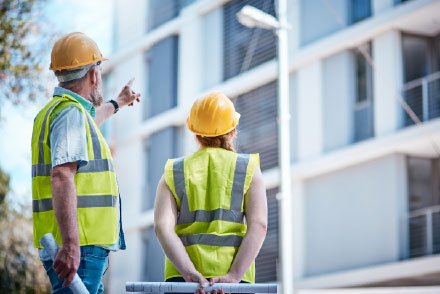
If further investigation is needed, the assessor examines the external wall system in more detail. This may include an on‑site inspection of materials, cladding, insulation, balconies and façade components. Where information is incomplete or unclear, the assessor may recommend an intrusive investigation to expose key areas such as cavity barriers, fire‑stopping, floor compartment lines and openings around windows and doors.
3. Fire‑Risk Evaluation
Using the PAS 9980 methodology, the assessor evaluates the likelihood of fire spread across the external wall system. This includes considering material behaviour, system configuration, building height, occupancy type, and the building’s overall fire‑safety strategy.
4. Assessment of Fire Protection Measures
The engineer reviews the effectiveness of fire‑resisting construction, cavity barriers, fire‑stopping and other protective measures designed to limit fire spread and support compartmentation.

5. Reporting and Recommendations
Once the investigation is complete, the assessor produces a detailed FRAEW report. This includes:
- A clear risk rating (low, medium (tolerable), medium and high)
- Evidence and findings from the investigation
- Proportionate recommendations for mitigation or remediation, where required
If the risk is low, the report will confirm that no remedial work is necessary. If the risk is medium or high, the responsible person must act on the recommendations to ensure the safety of residents and compliance with fire‑safety legislation.

Key Benefits of the PAS 9980 Methodology
Adopting PAS 9980 brings clear advantages for building owners, managers and residents:
- Consistency
PAS 9980 provides a unified national approach, helping fire assessors to assess external walls consistently and comparably across different buildings.
- Clarity
The methodology results in a clear, structured report that sets out the findings and any recommended actions. This helps responsible persons understand what is required and why.
- Proportionate, Risk‑Based Decisions
Rather than focusing on individual materials in isolation, PAS 9980 considers the full context of the building. This helps avoid unnecessary or overly cautious remediation and ensures attention is directed to genuine life safety risks.
- Improved Transparency for Residents
A FRAEW gives leaseholders and residents clear information about the safety of their building and any recommended actions, supporting trust and informed decision‑making.
- Future‑Ready Building Safety Records
The FRAEW report becomes part of your building’s long‑term safety file, supporting audits, regulatory oversight and future management decisions.
- Improved Mortgage Access
Lenders often require an EWS1 form. A recent FRAEW provides the technical basis needed for the EWS1 to be completed and accepted, helping sales and remortgages progress smoothly.
- Alignment with Current Legislation
PAS 9980 supports compliance with the Building Safety Act 2022 and the Fire Safety (England) Regulations 2022, both of which require external wall risks to be actively assessed and managed.
FRAEW FAQs
Are property managers responsible for arranging a FRAEW?
Yes. If you are the building’s responsible person under the Building Safety Act, you must arrange a PAS 9980‑compliant FRAEW whenever the fire risk assessment identifies concerns about the external wall system.
When should a property manager commission a FRAEW?
A FRAEW is required when there are uncertainties, defects, or fire‑risk concerns relating to cladding, insulation, fixings, or any part of the external wall system. Your fire risk assessor will usually flag when a FRAEW is needed.
Who should property managers appoint to carry out a FRAEW?
You must appoint an accredited professional, typically a fire assessor or chartered surveyor with proven PAS 9980 experience. This ensures the appraisal is proportionate, technically sound, and recognised by regulators and lenders.
Do leaseholders need to arrange a FRAEW?
No. The responsible person (usually the building owner or property manager) arranges the FRAEW. Leaseholders should, however, be kept informed of the findings.
Can leaseholders access the FRAEW report?
Yes. Leaseholders can request a copy from the responsible person to understand the building’s external wall risk and any recommended actions.
How much does a FRAEW cost?
The cost of an FRAEW depends on several factors including the height of the building, the number of apartment blocks, the extent of the cladding and combustible materials and the amount of detail provided in the documentation.
Each site will need to be assessed on its own merits and we estimate a cost averaging between £1,500-£12,000 per block.
If you require any further information or would like a quote for a PAS9980 FRAEW, please contact us via email at info@eastonbevins.co.uk or using the contact form below.
FRAEW Case Studies
Replacement of External Wall Systems
Easton Bevins was instructed to carry out an initial façade survey, along with intrusive investigations for Birmingham’s tallest residential tower block and provide an EWS1.
Read moreCladding Remediation
Following completion of a major, highly complex cladding remediation project that began in 2020, we are proud to have delivered the project ahead of schedule, under budget, and to have secured an A1 EWS1 (External Wall System) certificate – the highest possible safety rating.
Read moreCladding remediation for a high-rise residential apartment block
Following the release of the government’s Consolidated Advice Note 2020 Easton Bevins was instructed to inspect the existing façade construction of this high-rise residential apartment block.
Read moreWhy Choose Easton Bevins to Complete Your FRAEW
Choosing the right team to carry out a Fire Risk Appraisal of External Walls is essential. With Easton Bevins, you’re working with a consultancy that brings technical expertise, professional integrity and decades of industry experience to every assessment.
Working with us, you’ll get to take advantage of our:
- Proven expertise across property and construction
- RICS‑accredited professionals you can rely on
- Clear, practical guidance
- Established reputation for quality and professionalism
- Support beyond the assessment
FRAEW, Manchester
Manchester’s transformation over recent decades has reshaped the city’s skyline, with former mills, warehouses and industrial buildings now standing alongside modern residential towers and commercial developments. This mix of heritage structures and contemporary façades creates a wide range of external wall types across the region.
The city’s continued growth — from Spinningfields to Ancoats and Salford Quays — brings increasing demand for reliable fire safety insight.
Our team supports clients across Greater Manchester by producing detailed, evidence based FRAEW reports that help them understand external wall performance, identify risks and make informed decisions about remediation and management.
Get in touch
For more information please complete the enquiry form below and a member of our team will be in touch.
Fields marked * are required.